I finally found a "cloud" bookmark application that I like. I have my Google reader for all the blogs I read, and I thought I could use that, but you can't have folders (or I haven't found them anyway). I guess it's a reader and not a bookmarker (thus the name Google READER, silly).
I found "marklet", and maybe you know about it, but if you don't, I'd recommend it. Benefits so far:
* I can have visual folders for my different things (computer science, teaching resources, fitness ideas, etc).
* I can put a "button" (is it called an extension?) at the top of my browser (like the "Pin It" button from Pinterest. That way, when I come across a site I want to bookmark on any computer I frequently use (and have "extended"), I can just click on the button and it's put into my "clouded bookmarks".
* It's free.
* You can import your already existing bookmarks.
* I can have easy access to all my bookmarks all in one place no matter what computer I'm using.
* Now I don't have to suffer the agony of not having my home bookmarks available when I'm at work and visa versa.
* I get to say marklet, which just rolls off the tongue.
Thursday, July 26, 2012

Wednesday, July 25, 2012
Stereotype Threat
I'm on day 3 of the three day workshop on how to recruit and keep more women and underrepresented students into computer science classes. And yet again I learned some cool/useful things. Now you may be thinking, "I don't teach CS, I teach math, not that interested". Well, it could be that you would be an advocate for students to actually try CS. It's not just for people you stereotypically think may be interested. You solve interesting problems and interact with interesting people.
One point is that studies show that by about 2020, roughly 30% of jobs will involve fluency with computer science. This doesn't mean that people will just need to know how to use technology, but to understand it in order to do their job. This may be programming or altering programs or algorithmic thinking, etc. The trouble is, currently, only about 5% of freshmen are saying that they will major in CS.
You may be like me and think, okay, what could, say, Journalism have to do with CS. Don't they just type in their stories and send it through? What could be farther from CS? An example one of the professors gave us was a particular journalist that wrote code to automatically search various types of news stories from particular types of places (either countries or companies or governments) about particular topics. Then overnight (say) the program would gather all these sources, and in the morning, the journalist had all his facts and data available to him to write his story. He saved countless hours of researching and surfing the web and potentially missing a source. I thought that was enlightening.
Anyway, this post is about "stereotype threat" which I'd never heard of before. The professor discussed stereotypes and the good and bad of them.
GOOD: people need a way to categorize the world so that every new input into their brains is not NEW and unrelated to other things they know. It allows for shortcuts to process information.
BAD: because maybe one person makes a mistake, some people could stereotype a whole segment of the population as "bad" .... girls suck at math .... purple people are lazy .... citizens of green country are evil ....
Stereotype Threat is a person's fear of confirming a negative belief about that person's group. Say a common stereotype is that girls don't do computer science. Then if a girl actually wants to do CS, and if stereotype threat is in her mind (even though she may not call it that), then she hinders herself and her brain power by worrying that she won't "be good", she'll "validate others' opinion of girls in CS". She'll have harsher personal standards for herself and her performance will be diminished because she's spending so much brain power on worrying.
Apparently, this is a hot research topic currently. Okay, off to the last few sessions.
Monday, July 23, 2012
Bits/Bytes of Computer Science Information*
*(See what I did there?)
I'm currently at a Tapestry Workshop in Lincoln, NE, and on this first day have already learned about a ton of computer science resources I can use next year. One of the interesting facts I learned was about AP classes and AP tests given and the representation of women in the Computer Science tests/classes. Apparently, in statistics and biology and calculus, it's a roughly 50/50 male/female ratio. Guess what it is in CS? 81m/19f. There are probably also similar statistics for underrepresented segments of the population. Their point was that there is power in diversity, and everyone wins when an endeavor is diverse. Also, there's money in CS type jobs. Also, even the most basic jobs of the future will require understanding computational thinking; their example was a job ad for a dog catcher that required the applicant to not just be able to use technology, but to understand it.
Here are some resources I've learned of so far. I don't know how I'll incorporate them yet, but there is great potential.
Dot Diva (for girls in computing)
Bits & Bytes newsletter (scroll to the bottom for issues) (interesting articles about cs in the world)
CS Unplugged (cs activities you can do to introduce lessons or to take to non cs classes that don't need a computer)
Google in Education (who knew?)
Java Bat (good practice for the AP exam)
NCWIT (for getting more women in computing)
We've had 4 different speakers so far, and each has brought something to the table. Can't wait for tomorrow.
*Line stolen from this hysterically funny potty-mouthed lady.
Thursday, July 19, 2012
Calculus and TI-nspire
To add to the craziness of my next year (4 preps, first time flipping, possible teacher mentor, math club sponsor, InvenTeam cosponsor, NHS cosponsor, drinker....), I think I want to use "my" class set of TI-nspire calculators for my one calculus class as opposed to the TI-83/84's that I'm comfortable with.
I just got out of a Web Meeting of Calculus TI-nspire users, and there were some cool links and information (I didn't know slope fields were so easy on the nspire).
What I really want is a basic primer document of:
If you do this for calculus on the TI-83, do THIS on the TI-nspire. I know there are documents of walking you through stuff (I saw a 12 page document on Sean Bird's site), which are great for their purpose. But I want a more, two column, easy to sift through, "there there, it's totally possible and you don't have to read through a ton of stuff to find the specific function you want" document. You know, for the many times when I'll be a last minute user of remembering that I need to know how to do "this" right before I teach the class. I don't even mind if the 2 column document has some links to specific instructions on other documents. Does anyone know of such a document? Unfortunately, I don't remember all the stuff I have to do for calculus, but I guess i will this year. Maybe I'll create such a file.
I did learn one cool feature of the TI-nspire for calculus that's totally easy: slope fields! With the 83/84, you had to download a program. With the nspire (not even the CAS, it's just there): under graph > menu > graph type > DiffEqn ... and then just type in your eqn .... remembering to use y1 or y2, etc instead of "y" if you need it. Super cool!
Sunday, July 15, 2012
AP Computer Science Prep...
I just got back from my AP Calculus AB workshop, so I feel good about that course. Now it's time to focus more on the Computer Science prep. I still wanted to get a good sense of the order of topics. I know I could just look on someone else's syllabus, but I wanted to make sense of it myself and then check against how others did it. I guess that's "constructivist" thinking. Anyway, I feel better about it now. I first used "pretty girly" stock paper (used for scrapbooking) and cut each page up into smaller index card sized pieces. Then I just went over the AP Curriculum and textbook and such and listed topics and things I think the kids should know.

Then I first separated them into big ideas that went together.

Then I put the piles in order of how I think they could be taught. Then I checked against how my online course textbook presented things last year, and I checked it against other syllabi. I like it. Some of the things I think I'll sprinkle throughout the course instead of teaching first (as is done in my old text). For example, I don't think the kids IMMEDIATELY need to know about ethics and safety and binary/hexadecimal, etc. I can introduce that after I "hook them".
The awesome teacher I went to last week for calculus mentioned that at her school, the AP teachers have about 3 weeks to get the kids to buy into their course. The kids can't drop the 1st 3 weeks. Then they can (with a ton of paperwork to discourage the practice). I have to win over my students and show them the fun and value of computer programming. So I think I'll start with some sort of graphics (super scaffolded) or some sort of game (again super scaffolded) that introduces some of the other concepts I want them to know (variables, primatives, loops...) with the warning to them that they won't understand the WHOLE picture at first, but they get to see the power of programming and the capabilities.
I'm also going to a summer workshop for computer science late July. I don't want to feel so behind and slow, so I'm going over this book chapter by chapter to refresh my memory. I think I also want the kids to have a copy of it this year. It was recommended on the AP Central Electronic Discussion Group for Computer Science, which I also highly recommend.
Other than that ...
Saturday, July 14, 2012
Math Libs...
Remember Mad Libs from childhood? I thought I could piggy back off that idea for a math activity. I'm thinking either a part of the first day of school, or a day before a holiday, or some other such time. It wouldn't take all period. My guess is 15-20 minutes (longer if they do the "homework" in class). Here's a sample of one of two I want to make. I envision a "BAT" version and a "___" version with a different storyline on the back. Students should keep their version hidden from people with the other version.
Edited to note:
This idea is not affiliated with MathLibs(R), a brand used in commerce for over a decade (link to: http://kidcourses.com/mathlibs/ ).


Edited to note:
This idea is not affiliated with MathLibs(R), a brand used in commerce for over a decade (link to: http://kidcourses.com/mathlibs/ ).


Sunday, July 08, 2012
Splish Splash Musings...

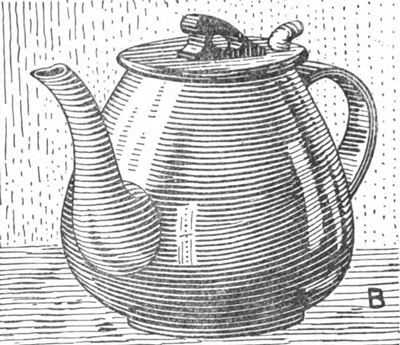
As I was swishing my feet in the warm waters at these past few days (SO RELAXING and FUN), I was obviously thinking about school. I'd just been looking at a book that contained one of those ink drawings that fascinates me. Something like this.
I'm awed that you can create something with just different lines that are closer or farther or hatched or such. Then my next thought was that I could never do that. Then my next next thought was, ah HAH I'm being just like the kids and don't want to even attempt something because I immediately don't know how to do it right off the bat. I didn't want to tinker.
Then I came up with "Tinker Time". I haven't fleshed it all out yet, but I'm thinking of creating about 12 little 5 minute activities for the kids to do at the start of math class. The activities don't necessarily have to be about math, and the object is not to perfect some skill, but the point is to dive in and get your hands dirty and try something and then reflect on what happened. Ultimately, getting the students to not be afraid to tinker, basically, and hopefully that will translate into applying those brave skills to tinkering with math problems. I thought we could do them once a week, and then cycle around to the same activity 2 more times during the school year.
Some of my ideas were:
* show them a pen/ink drawing and have them just explore doing it and seeing what's what
* some challenging maze puzzle that is recreated about 5 times and they can just practice
* maybe some legos tossed around and they have to explore creating something
* given a prompt of an object, they have to draw it using only triangles or only circles or something
And for all of these, again, I'll keep stressing the goal of just tinkering to take the pressure off (in their minds), but to nefariously get them to get comfortable with just diving in and doing and trying. Mwa ha ha ha.
Sunday, July 01, 2012
classroom ideas....
As I'm idling away the summer, I'm wondering what I can do to make my classroom more "homey" next year. I did a little better this year with being harsh with myself and tossing stuff I hadn't unpacked or use for a year. But then all the dreaded engineering boxes took up a bunch of room, and they never quite made it out of the cardboard boxes. My excuse was that I didn't want to buy an organization system on the fly without trying the year out and seeing what would make sense. That or I'm a lazy procrastinator. I'm picking the former.
Some of my ideas so far (don't know if they'll pan out) are:
* the teeny white Christmasy type lights strung around somehow.
* painting the ceiling tiles somehow.
* bringing in a metal porch swing (LOVE them and have 2 at home, one on the porch and one in my office)
* extra "calm" decorative lighting as opposed to the overhead stuff.
* painting the cinder block walls (I'm thinking I'm not motivated to make that happen, though)
* less tables (we don't have desks) and more students around the tables. This year I had 10 large tables in class, and there was hardly room to move around. I've also heard that I'll be most likely having a class of 30 or so, so I'd need at least 8 tables anyway if I had 4 2 a table. Ugh.
* I'd like a wall or board dedicated to articles I've found in my magazines or on the web. Stuff about cool jobs kids may not have heard about or things about inventors or students making a difference or inspiring stories.
* I loved having the mobiles from the last summer project hanging up all year, but those are coming down. Maybe I can have the students in class make other types of mobiles that are topic related.
* This craft gave me some ideas. Maybe I can make a BIG jigsaw puzzle template with 30 pieces (or more, one for each class .... eeeek), and then the students decorate the piece to reflect their personality, and then we hang the finished product all together. But if I have 120 students .... have to think about this one.
* I have a big wall of windows in my room, and we're on the 1st floor. I'm thinking of the students making things that would face out and the passers-by would have art work or math work to gaze at.
Okay, must think some more about this ...
Monday, June 25, 2012
Great Opportunity
These past few days, a colleague and I were at MIT for EurekaFest. You can read about it here. Holy Cow was it an inspiring few days. There were many high school teams that spent all last year inventing something. They presented their inventions in a variety of ways (talks and booths and discussions). There were "adult" and "college" inventors that were also happy to discuss their experience. There were MIT professors that actually taught invention classes where the whole class invented something throughout the year (semester?). There was this inspiring gentleman. There was this mind-blowing invention.
I'm mentioning it here because we only learned about it from one of our students doing research and asking us if we could do this. To a student at this event, the one thing we kept hearing was that they were changed by their experience of going through the process. I know my colleague and I were inspired. So, if it sounds intriguing, I think you should think about applying for NEXT year. The initial process/application is due in April, so there's plenty of time to get organized.
I'm mentioning it here because we only learned about it from one of our students doing research and asking us if we could do this. To a student at this event, the one thing we kept hearing was that they were changed by their experience of going through the process. I know my colleague and I were inspired. So, if it sounds intriguing, I think you should think about applying for NEXT year. The initial process/application is due in April, so there's plenty of time to get organized.
Tuesday, June 19, 2012
Epiphany
I had a conversation with friends the other day about writing in general (no mention of blogs). They asked if I liked to write or if I found it challenging. I thought about it and said that I did not find it painful. I usually just blurted stuff out on the paper in a stream of consciousness type of way and then went back and adjusted later. My thought is that you basically have an idea of what you want to say, and if you start out by nitpicking every sentence, then that whole picture is lost in the effort of perfection. Anyway, it works for me ... for writing anyway.
For the last 5 days I've been gathering site links and ideas and such to start mapping out my computer programming curriculum. I found many helpful people and ideas and opinions including my own. Then apparently, I found all my baggage about teaching the class. And ..... I have not put down one sentence of how I want the year to proceed. What works for me in writing apparently got lost in translation when I had to carry it over to mapping out a whole new class. My idea of being (nearly) perfect is getting in the way of me actually doing anything to make progress. I keep having these "but ... but ... but ..." thoughts taking up residence in my head.
So my epiphany is just that. BLURT IT DOWN to at least have a starting place with which to work! If you don't start, you can't finish. How do you eat an elephant? One bite at a time! Rah, rah, rah. Okay, that's my goal for this afternoon: get a broad brush stroke down on paper.
Thursday, June 14, 2012
Summer Time...
Ahhhh, the joys of getting enough sleep. That's basically in the top 5 treats of summer vacation. That and the feeling that I have PLENTY of time to organize how I want to teach my 2 new preps next year. Hah! Knowing me, I'll put it off until the last minute and then scramble around wondering what happened to my carefree days.
I did pull out my old calculus bins, and I actually organized them chronologically. I recycled TONS of dated things from them. Now I'm pushing that topic to the back of my mind to gnaw on at odd moments. I'm still thinking of flipping that class daily, and am tossing around ideas to make it doable in the time frame I'll have. It makes me giddy to think I can actually assign problems for class practice (formerly known as homework) that involve "a" and "b" instead of actual numbers. You know, there's a piecewise function with, say, 3 pieces and instead of "3x + 7", one part has "3x + a", and the question is of the sort: find "a" so that the function is continuous. In the past, it's assigned, kids struggle, they come to class, then I walk through how to do it. Besides not being the best way for them, it also ate up class time. NOW I envision myself skipping through class with a goofy grin on my face and just feeding them little hints. POOF! More time in class and more challenging problems. We'll see what the reality really is like, but I'm willing to try it for one year.
This calculus class is also the class that will be through the ropes with me as a teacher for the 3rd time (geometry, precal, calc). To say we're like a dysfunctional family at this point basically sums it up.
My current project is the AP Computer Science class. I have 13 students that have signed up, and they have basically never programmed before. I've heard various theories about how I should use Alice or Scratch or something drag and droppy. I may be naive, and that will certainly come out as the school year happens, but I think that at the end of the day, the students still have to be able to write code and be careful with syntax and find their bugs and such. I think they're up to it. I'm forging ahead and introducing Java immediately. I feel that if I start with another type package then somewhere deep down I'm saying to the students: you can't handle Java. Here's a warm fuzzy puppy that bounces around the screen. Weeeeeee.
Saying that, I think I want to start immediately with the first class. In some form, I want them to write code that day (heavily scaffolded), possibly doing graphics. I have a long term first project in mind, but I have to work out the bugs.
Okay, that's me setting it down in stone. Let's see what happens as the year progresses.
Wednesday, June 06, 2012
Flipped AP Calculus Class
Curses on my principal! This year she's been on the "flipped classroom" train. She sends us e-mails. She "gently" suggests we just try it once. She sends more e-mails containing articles raving about flippin' flipping. I kept my head low. I had conversations with myself: What's she thinking! That's too much! I have other things that I'm juggling! I can't see how it would work with students that don't have computers. What if they don't watch at home? What if they come in and either didn't watch and say I didn't get it, or watch and say I didn't get it? Do I do it for every lesson? Every subject?
Then she sent a portion of an article by this teacher, who did this with AP Calculus, which I'm teaching next year. I've also been reflecting and brooding on all those students I had this year in precalculus who perfected the art of "playing school" by pretending to be taking notes and paying attention while they were just going through the motions. Passive "learning". I had no effective consequences for that, not in the "shame on you" way, but in the catch it and make them tune in way. By flipping, and some effective way I can give points or assess that they watched, then I can do the practice problems in class. I totally agreed with this teacher's statement that by the time the kids get home (and ours get home pretty late), their brains are fried, and they may not be giving their mental "all" to the math homework.
Anyway, I'm batting around the idea of doing this for next year for calculus. Teacher Tube? Screencast.com? Other? There seem to be a ton of resources in the above link. .... I'll THINK about it.
Friday, June 01, 2012
Nice To Meet You...
When I started this blog in January of 2005, I didn't know the what's/how's/why's of how this would transpire. I wanted to keep most (all?) of my privacy just in case there were repercussions. Within the last year or so, I've only JUST started mentioning to people I know that I blog, and THAT took me 6 years. Now it feels kind of stilted and phony to me to just keep signing e-mails or blog responses as "Ms. Cookie". I completely understand the reasoning for everyone doing it, but it started to feel "un-right" somehow for me. By the way, why that name? I like cookies. Really logical.
I've also been mentioning blogs as a great resource to other teachers, and again if feels phony when I fail to mention mine. So what if they come upon it and recognize my picture. Do they mention it to me? Do they not? Do I mention it? ARGH!
So, hello, nice to meet you. I'm Shireen D. I never started out wanting to be a teacher. Now I can't think of anything else I would rather spend my time doing. Blogging and reading blogs have been such great experiences that allow me to get advice and resources and camaraderie and hear other teachers' ideas, and I'm able to think out loud on what has worked and not worked for me. I'm less in a teaching vacuum because of the generosity and availability of other teachers that are processing their work for the rest of us to share.
Case in point today. We have a new teacher that will be teaching AP Statistics next year, and we quickly went online with various search phrases and were able to find blogs, activities, syllabi, outlines, etc. Now this teacher will be affecting 15 or more kids and will have great resources to do so. The inevitable question: WHAT DID WE DO BEFORE THE INTERNET?!
Wednesday, May 30, 2012
Last Day Reflections
Like something that still doesn't feel quite done, THE SCHOOL YEAR IS OVER! I gave my last 2 finals. I marveled that my Digital Electronics students actually learned something. I turned in my last grades with literally seconds to spare (over the ceiling intercom, "Ms. ____ are you done yet?"). I contemplated packing up my room and decided to do it later. I went to a last shindig with our juniors who were thanking industry partners for their week-long internship. I celebrated with a dinner out and a reading of a funny book. And now blogging. Woot!
Things I learned or was reminded of again this year:
* people before paper (if someone is vying for your time and you're trapped in your busy work, stop and talk with them; paper can usually wait).
* like all people, kids remember how you make them feel, not how stellar your knowledge was of a particular topic.
* being physically around a group of negative people too much is not healthy for anyone; it feeds on itself.
* change is inevitable.
* kids are still kids, and no matter how mature they act; there are still things they don't know and may appreciate hearing a different perspective on.
* people usually aren't doing the things they do to annoy you; everyone is mostly trying to get by the best way they currently know how; react accordingly.
* no school is perfect; warts happen; you have to know what your deal-breakers are and how to work healthily around things/situations if you can.
Thursday, May 24, 2012
Final Exams......
This morning I happened to read some teacher suggestions (a union teacher journal) on writing in the classroom. One teacher mentioned that as she handed out tests to her class, she instructed the students to write an inspiring message on their test. She mentions that they would roll their eyes but do it anyway. Then if she forgot to mention the message on later, future tests, the students reminded her.
I gave some geometry finals today, and as they got ready, I told them to write inspiring messages on their scratch paper. I mentioned that they'd do great, and they have to free up their brain cells from stressing, so they can concentrate on doing math.
I read through their messages after the test:
* Don't overthink it! Relax and everything will be okay.
* Kick butt!
* You are the smartest person in the world!
* You know things .... just try your hardest.
* I'm proud of you.
Feet Cubed....
As every high school student OBVIOUSLY knows, "3 feet cubed" is "3x12 inches cubed". Duh! You know, you just multiply by 12 because there are 12 inches in a foot.
Like everyone else, I've tried various ways to dispel this rumor: we've drawn models, we've used models, we've discussed. Seemingly to no avail. This year, I tried yet again with a different tactic.
We started out with a rectangular prism 3' x 2' x 4'. They found the volume in feet cubed. Then I asked them to find the volume in inches cubed, and to a person, they all wrote the wrong answer (24 x 12 = 288). Then without saying they were wrong I had them go back and redraw the prism into the inches equivalent and recalculate the volume, and OH NO, they were wrong with their first "288". Hmmmmm. So, this is stuff I've tried before. Now for the "new" attempt that MAYBE will work.
I had them write: 5 ft^3
Then change to: 5 * ft * ft * ft
Then EACH foot had to be converted to inches, so
= 5 *ft * ft * ft
= 5 * 12in * 12in * 12in
= 8640 in*in*in
= 8640 in^3
Let's see if this one sticks.
Like everyone else, I've tried various ways to dispel this rumor: we've drawn models, we've used models, we've discussed. Seemingly to no avail. This year, I tried yet again with a different tactic.
We started out with a rectangular prism 3' x 2' x 4'. They found the volume in feet cubed. Then I asked them to find the volume in inches cubed, and to a person, they all wrote the wrong answer (24 x 12 = 288). Then without saying they were wrong I had them go back and redraw the prism into the inches equivalent and recalculate the volume, and OH NO, they were wrong with their first "288". Hmmmmm. So, this is stuff I've tried before. Now for the "new" attempt that MAYBE will work.
I had them write: 5 ft^3
Then change to: 5 * ft * ft * ft
Then EACH foot had to be converted to inches, so
= 5 *
= 5 * 12in * 12in * 12in
= 8640 in*in*in
= 8640 in^3
Let's see if this one sticks.
Sunday, May 20, 2012
Solar Eclipse Video

Monday, May 14, 2012
Slow Learner
Today in discussing Surface Area and Volume of 3D figures, I found out why textbooks choose to flatten out a cylinder in this way:

as opposed to this way:

I was "not on the ball" when I was talking while simultaneously drawing it the "bad" way.
Oy!
Second, I think I've jumped on the "be bossy in how you accept homework" wagon. I strongly suggested in the past that students show work neatly when they do their homework or tests. I never went further than that. I've seen too many instances now where they or I can't follow their work and when there's a mistake, you have to do extra work to track it down.
Because we're doing SA and LA and V of 3D figures today, and because I've seen so many mistakes in the past (and made them!) just from sloppiness, I laid down the law today. I had a small discussion about how they're not just doing a problem, but they're communicating a process. If the reader has to question you about what you're doing, then you've failed as a communicator. If you have to track down your work later on, and it takes you longer because you're jumping around all the work and can't follow the thought process, then you've failed as a communicator.
I'm making them write things DOWN IN COLUMNS and drawing and labeling neat pictures and indicating what they're finding for each step. With lots of (good-natured) grumbling (see, I'm in denial), they got to work and the beginnings of things looked promising.
I think I want to start off next year as BOSSY PANTS in this manner.
Also, SO excited! I found out what I'm teaching next year (95% sure):
Precalculus preAP
AP Calculus AB
AP Computer Science
Digital Electronics
Woot! Who's going to be busy this summer? I'm going to miss the enthusiastic 8th and 9th graders, but I'll be excited to challenge my brain in a different way.
Tuesday, May 08, 2012
Stacks & Queues
In Computer Programming we learned something about various data structures, two being "stacks" and "queues".
Stacks can be thought of like a pile of plates. You keep adding to your list (or plates that are stacked on a table), and when you want to remove one, you remove the top-most one (or the last thing you put on). You can liken it to "last on first out".
Queues are like movie lines - first one in is the first one out. So you can add to the end of a list, and then when things are removed, they peel off from the start of the list.
I thought about that today when I was teaching for two reasons. There are all these "extra" things we have to remember in addition to teaching our content:
* put kids on "mandatorials" if they fail for a grading period
* check in and make sure they're coming to tutorials
* don't forget to update your money log if you're a sponsor of a club
* check in with kids emotionally to see if anyone is acting "off" from their normal selves
* if you're a team leader, check in with other people teaching in your grade level
* do your 5? 6? observations of other teachers throughout the year
* have you planned for an interdisciplinary unit?
* what about a flipped class?
* check in before every test you give to make sure kids know how to study for tests or need extra help
* kids stressed? don't forget that extra activity you did that was short and sweet and was a temporary relief for them
* make sure you connect with the students
* there are no stupid questions, so get that look off your face and answer patiently (it's the FIRST time this kid is asking)
etc.
So this came to light today when I realized that I'd totally forgotten to do one of those things (more?) that should have been ingrained in my mind - the "check that they know how to set up a study schedule for learning" .... (because most of them have never learned how to study for math tests before). Then I thought, I'm like a "queue". I have so many more things popping onto my to-do list, that the old/first stuff falls off my radar while I'm concentrating on the "new fires".
Maybe I need a bunch of charts hanging around my room or somewhere I can see them and the kids can't. That way I can take a quick glance and see if anything needs to be addressed currently. ..... But then I'm thinking, the list would probably be SO long I wouldn't have space to hang it :).
Sunday, May 06, 2012
EOY Wrap Up
Only 3 weeks and 2 extra days of teaching this year. Oy! As always when I come to this part of the year, I shake my head at how fast it went and what all I still have to do and how there's not enough time and too many testing interruptions to finish up strongly and and and ....Then I also start to get excited about next year. I think about the potential classes I'll teach (not 100% sure yet) and then I don't want to jinx anything, so I make myself THINK it'll be okay if I don't teach a particular course (you know, lie to myself). Then I get nervous because it seems 99.9% sure I will be teaching certain courses, then I wonder how it will all work out. Maybe all this mental gymnastics is just a smoke screen to bend my mind away from the fact that THERE'S HARDLY ENOUGH TIME LEFT THIS YEAR.
Anyway, I was out doing chores today and was at Barnes & Noble and picked up Ron Clark's new book. I did not know he started a new academy. I find his enthusiasm and energy and good thoughts and "can do" attitude and belief and vision so inspiring. Just the jolt I need to end the year. I think his school is 5th-8th, and I teach mostly high schoolers, but I still found many things I want to think on and mold and implement.
Next year, we'll have our 1st senior class. This will be the class that were freshmen when I started teaching at my "new" school. This is the class that in my first year caused me much grief and stress and joy and frustration and laughter. It will be sad and exciting to see them graduate, and it will feel like a different school without them in 2 years.
Fun things this past year:
1. Digital Electronics. At the start of the year, I had my students write on index cards what they were worried about for the coming year in DE. I clipped them together and put them away. Just recently, I found them and as a class we had a giggle reading them. We were all "I hope I don't get electrocuted!" ... "I hope it's not too hard!" ... "I won't know what to do!" And now for the most part, we're bread boarding geniuses, we can work with our BoeBot and circuits and K-Mapping and State Machines and such.
2. My online AP Computer Science class from Mizzou. I took it to "help" one of our students that wanted to take the course but didn't want to take it alone. I ended up learning a lot about the student's point of view in an AP class and trying to balance the work load all the while juggling the ton of other things that make up life. It was also interesting to take an AP class from a college course perspective.
3. Overloading of Duties/Happenings. Okay, not so fun in the stress department, but it's always fun to tackle new challenges. I: was NHS cosponsor, one of 3 HS team leaders, agreed to cosponsor an "inventing team" for next year (that started this year), sat in on TONS of interviews and learned TONS, taught a 1/2 hour weekly yoga class to our sometimes-unwilling students, tried a cross-country geometry project, had several guest speakers in DE (a mix of successful and not).
I'm eager for summer to start for the longer periods of R&R that I'll get and also for the workshops and such I'll get to attend and the planning for 2 new courses I'll be teaching (most likely) and the vow to myself not to sit so much and to get up and move.
Subscribe to:
Posts (Atom)